
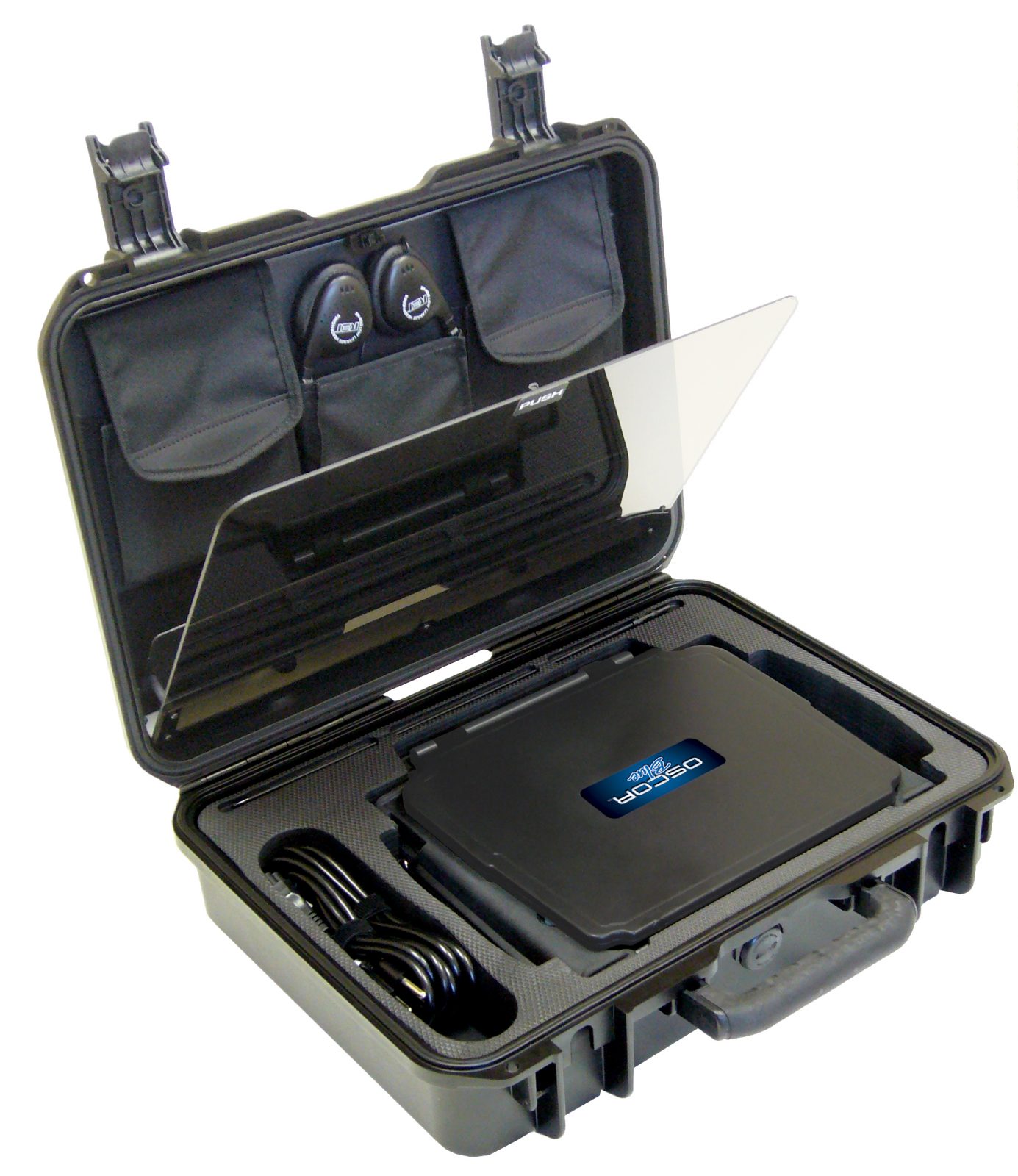

The application of communication systems in various sectors is rapidly developing worldwide, especially mobile and satellite systems, which use wideband communication channels. OSCOR Blue is a serious tool for the evaluation and integration of these systems in the radio frequency range.
OSCOR Blue can be successfully used for:
- Detection of unauthorized signals in a very crowded radio frequency spectrum.
- Analysis of radio frequency signal distribution
- Evaluation of communication channel utilization
- Determination of communication system coverage area (cell towers, radio relay systems)
- Installation and maintenance of wireless data transmission systems
The application of communication systems in various sectors is rapidly developing worldwide, especially mobile and satellite systems, which use wideband communication channels. OSCOR Blue is a serious tool for the evaluation and integration of these systems in the radio frequency range.
Analysis and distribution of the radio frequency spectrum is of great importance for many organizations, such as wireless operators, airports, ports, laboratories, and during design and exploration work. OSCOR Blue is an excellent tool for detecting “complex” radio frequency signals in adverse environments.
Range/Operating Speed
OSCOR Blue scans the 24 GHz range in 1 second with a step of 12.2 kHz. High scanning speed, built-in antennas, embedded software, and quick readiness for operation allow for significant time saving when working with OSCOR Blue.
Automatic Multi-Antenna System Switch
- The use of the built-in automatic antenna system switch allows obtaining a real-time image in the range from 10 kHz to 24 GHz (10 kHz to 8 GHz for model OBL – 8) without “stitching” and “dead zones”.
- The built-in 10 dB preamplifier increases receiver sensitivity.
- The built-in attenuator from 0 to -30 dB allows operation near powerful transmitters.
- Capturing and detecting all active signals. There are no losses due to limited antenna range or the need to switch external antennas.
Compactness
Light weight (up to 4 kg) and small dimensions allow the OSCOR Blue to be used mobilely for data collection and signal analysis in the field. Built-in antennas and software allow the device to be easily deployed to capture and compare the signal spectrum in various locations.
Patented Trace Analysis for Fast Signal Detection
In addition to its compact size, high speed, and mobility, the trace analysis function developed by REI adds the possibility for a complete analysis of the signal spectrum on the device screen without the need for an additional computer. The functionalities of the trace analysis software and the user-friendly menu navigation of the OSCOR Blue allow for high productivity.
Creating a Signal List
Based on the trace analysis, a signal list is created according to peak values. Furthermore, signal lists can be created for different locations with subsequent comparison of these lists.
- Creation of a signal list from trace analysis according to the corresponding algorithm
- Multiple creation of a signal list, at one pass per second
- Analysis of unstable signals (with packet transmission, with changing frequency).
Sonogram
Viewing a raster spectrogram (sonogram) obtained from trace analysis over a period of time.
Dynamic Display of Persistent Signal Spectrogram
Dynamic display of the persistent signal spectrogram allows detection of the active signal spectrum in a complex radio frequency environment, using dynamic color change to visually separate the signal from ambient noise or numerous transient signals.
Transient (non-repeating) signals are displayed in darker colors (blue and green) and fade quickly, while persistent signals are displayed in bright colors (red and yellow). This allows for easy identification of persistent signals in the presence of interference.
Detailed “Waterfall” Spectrogram Recording
- Allows recording detailed information about signal spectra over a long period of time, exceeding 30 hours, and then analyzing it in detail.
- Recording and viewing the spectrogram allows detecting the activity of transmitters with frequency hopping (FHSS), pulsed, and many others.
- OSCOR Blue allows recording a “Waterfall” spectrogram with a minimum resolution of 12.2 kHz (every 5 seconds minimum)
Demodulators
- FM wideband
- FM narrowband
- AM wideband
- AM narrowband
- With subcarrier
- With single sideband frequency
IF Demodulator Bandwidths
- Audio: 200 kHz, 12.5 kHz, 6.25 kHz, 2 kHz
- Video: 12.75 MHz, 6.375 MHz
Video Mode
- NTSC, PAL, SECAM
- FM or AM wideband demodulator
- Viewing the demodulated video signal on the screen
- Analysis of the demodulated signal oscillogram without interrupting spectrum scanning.
Signal Analysis and Localization
The detected signal can be easily localized by changing the relative RSSI level and using localization functions in the near reception zone.
Oscilloscope
The demodulated signal is displayed as an oscillogram.
MPP – Universal Probe (supplied in the set)
The universal probe connects to the auxiliary port for detection of:
- Carrier signals in wired lines
- CATV for direct connection to cable television lines
- Coaxial (F connector) for direct connection and general measurements (75 Ohm, cable terminal included)
- VLF – for analysis of low-frequency radio band signals from 20 kHz to 20 MHz.
- Infrared sensor for detecting signals in the 700-1100 nm range.
- Optical sensor for detecting visible range transmitters 450-1100 nm.
Technical Specifications:
Radio Frequency System
- Frequency Range: 10 kHz – 24 GHz
- Displayed Average Noise Level (with 25 kHz resolution):
- Without preamplifier -100 dBm
- With preamplifier -110 dBm
- Scanning Speed: 24 GHz per second
- Preamplifier: up to 8 GHz = 10 dB
- Attenuator: up to 24 GHz = 0 dB, -10 dB, -20 dB, -30 dB
- Dynamic Range: 90 dB, by intermodulation interference (SFDR): 80 dB
Audio System
- Demodulator Types: AM (amplitude), FM (frequency)
- Bandpass Filters: 800 kHz, 200 kHz, 12.5 kHz, 6.25 kHz, 2 kHz
- Subcarrier Filters: 6.25 kHz, 12.5 kHz, 200 kHz
- Headphone Output (headphones included)
- Built-in Speaker
Video System
- Format: NTSC, PAL, SECAM
- Demodulators: AM, FM
- Filters: 12.75 MHz, 6.375 MHz
- Subcarrier Filters: 6.25 kHz, 12.5 kHz, 200 kHz
Antenna System
- Built-in antenna system with automatic switching:
- Frequency Range: 10 kHz – 24 GHz
- Directional Antenna DA-8000:
- Frequency Range: 1.5 GHz – 8 GHz
Inputs/Outputs
- Aux RF Input: from 10 kHz to 8 GHz
- IF Output: 75 MHz / 25 MHz (bandwidth)
- LF Output: 6 MHz
- Resolution: Aux – port for connecting universal probe
User Interface
- Built-in 8.4″ touchscreen display
- Soft keys and rotating optical switch
- USB Port (Type A): for connecting peripherals (keyboard, mouse)
Power Source
- Universal power supply (included): 100-240 V, 50-60 Hz
- Removable battery: lithium-ion accumulator, autonomous operation time 2-3 hours
External Memory
- Slot for connecting flash card (CF)
- USB-A Port
Mechanical Data
- Device Dimensions: 29.2 x 33.5 x 7.6 cm
- Device Weight with Battery: 4.4 kg
- Transport Case Dimensions: 14 x 37.8 x 49.5 cm
- Case Weight with Device and Accessories: approximately 9.5 kg
- Operating Temperature, °C: from 0 to +50
Supplied set
| Portable spectrum analyzer OSCOR Blue - 24GHz |
| 15V power supply |
| US power cord |
| Euro power cord |
| Rechargeable lithium battery |
| Rod antenna - connects to the top of the antenna panel. |
| Compact Flash memory card - installed in the device |
| Universal probe - MPP |
| Headphones |
| Accessories of the universal probe: electrical cord with crocodile clips, SMB-SMA adapter, 75 Ω terminator (plug), spare stylus. |
| Directional antenna - with cable and clip |