
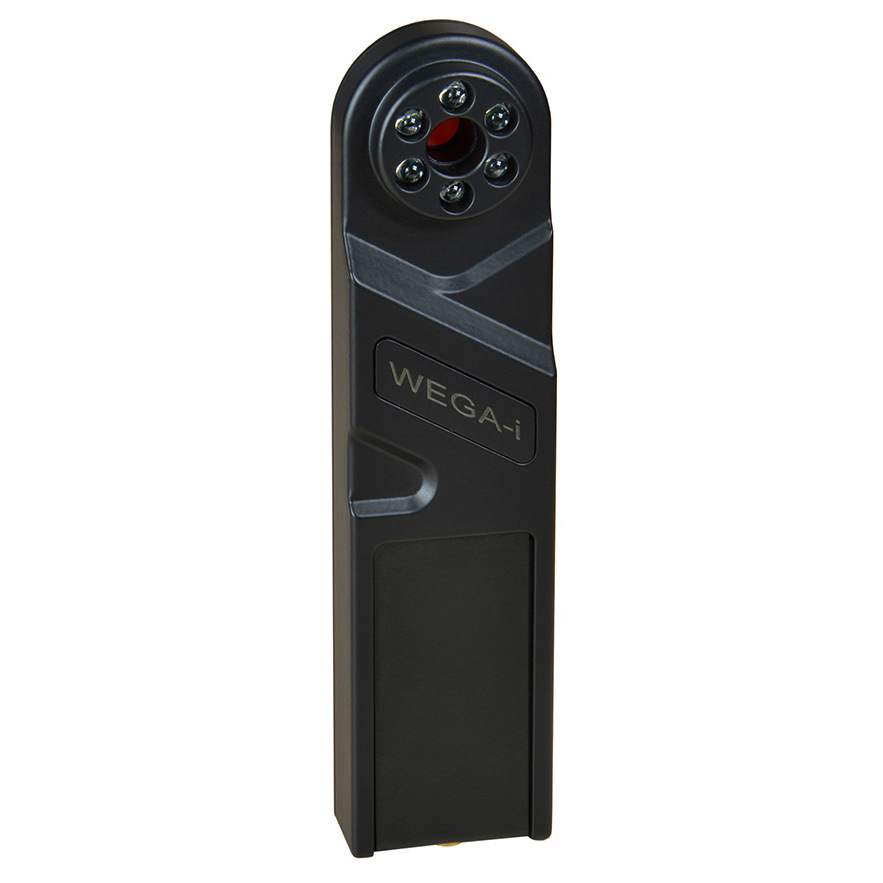
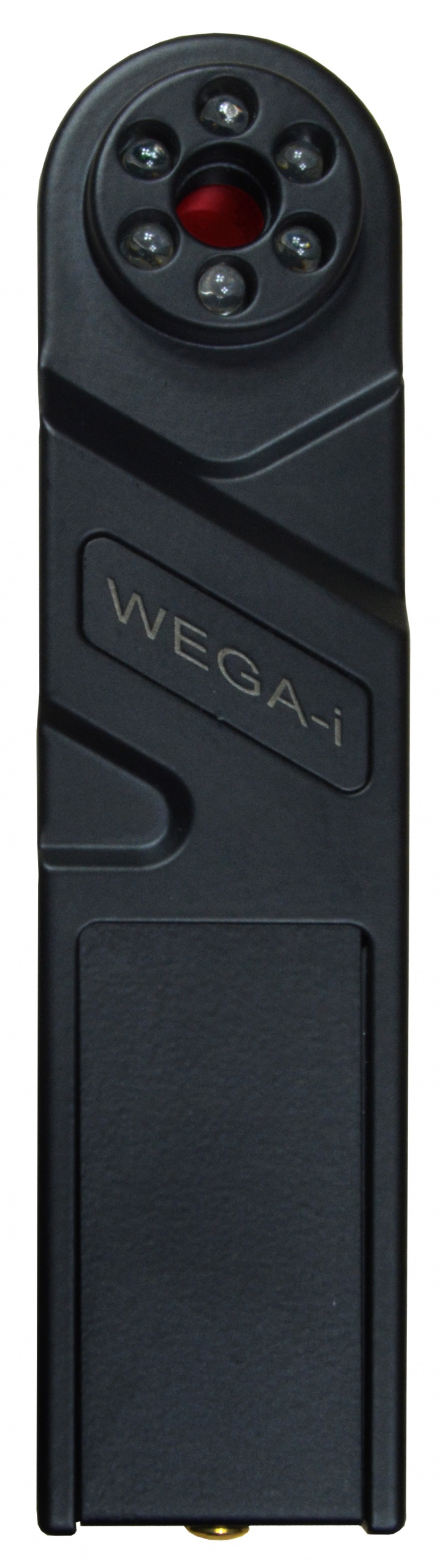
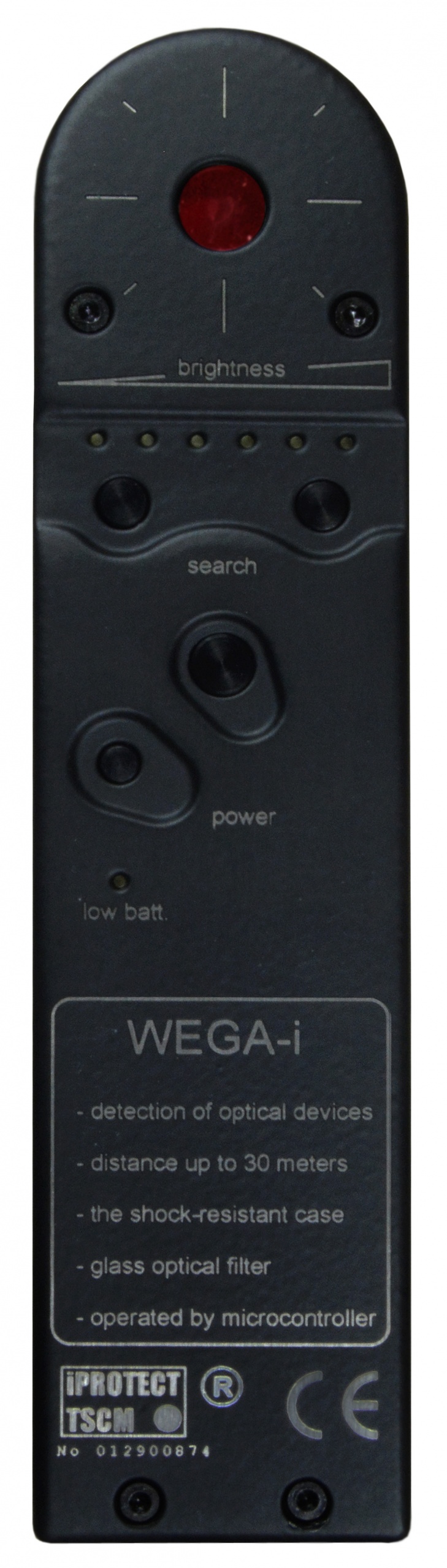
The WEGA-i hidden camera detector determines the presence of optical devices regardless of their operating status. If you look at the search from the perspective of physical processes, the detection is based on the reverse reflection of directed radiation by the optical system of the video camera lens. The WEGA-i hidden camera detector allows detecting all types of video cameras including “pin hole”.
This unique device was created by professionals in the field of technical means of information protection for quick and reliable detection of hidden video cameras. The optical probing underlying the device’s operation allows detecting micro-lenses of hidden video cameras by optical signs regardless of their operating status and video signal transmission channel.
The search and detection of micro-lenses of hidden video cameras is carried out by visually analyzing the surfaces of the room, all elements of furniture and interior through the device’s eyepiece.
Detection is based on the property of reverse reflection of directed radiation by the lens’s optical system – the CCD matrix of the hidden video camera. Filtering the monochrome radiation reflected by the micro-video camera allows separating natural glare from other light sources.
Capabilities
- Micro-lens detection distance: 2-10 meters
- Filtering of glare from other light sources
- Strobing radiation mode
- Adjustment of probing radiation intensity
- Low battery indicator (low batt)
- Powered by 2 AAA batteries
- Size: 140 x 34 x 16 mm
Search Procedure
- Determine the likely viewing area of the hidden video camera. Detection of the micro-lens is possible only from the viewing zone of the hidden video camera.
- Turn on the device power (power).
- Adjust the required intensity (brightness) of the probing radiation. The required radiation intensity is determined by the illumination, the reflective ability of the analyzed surfaces, and the distance between them and the operator. Use a reference video camera to set up the device and check its functionality.
- Conduct a visual inspection through the device’s eyepiece of all room surfaces, furniture, and interior elements, directing the radiation into the control zone (search). Increased attention should be paid to the upper part of the room, especially elements of suspended ceilings. Carefully inspect fire and security alarm sensors and other interior elements that allow installation and provide sufficient view for a hidden video camera.
- An indication of probable micro-lens detection is the observation of a bright, glowing dot on the controlled surface or room element. Mirror or highly reflective interior surfaces may give similar light responses. A slight movement to the side gives displacement or complete disappearance of the “false” glare. The observation of a bright, stable glowing dot from various viewing angles and distances indicates the signs of a micro-lens and requires physical analysis to detect and neutralize the hidden video camera.
- Analyzing the same surfaces from several points in the target zone contributes to increased detection probability.
The micro-lenses of modern covertly installed video cameras have an exit aperture less than 1 mm. This allows their installation in furniture, interior elements, and electronic devices located in the room.