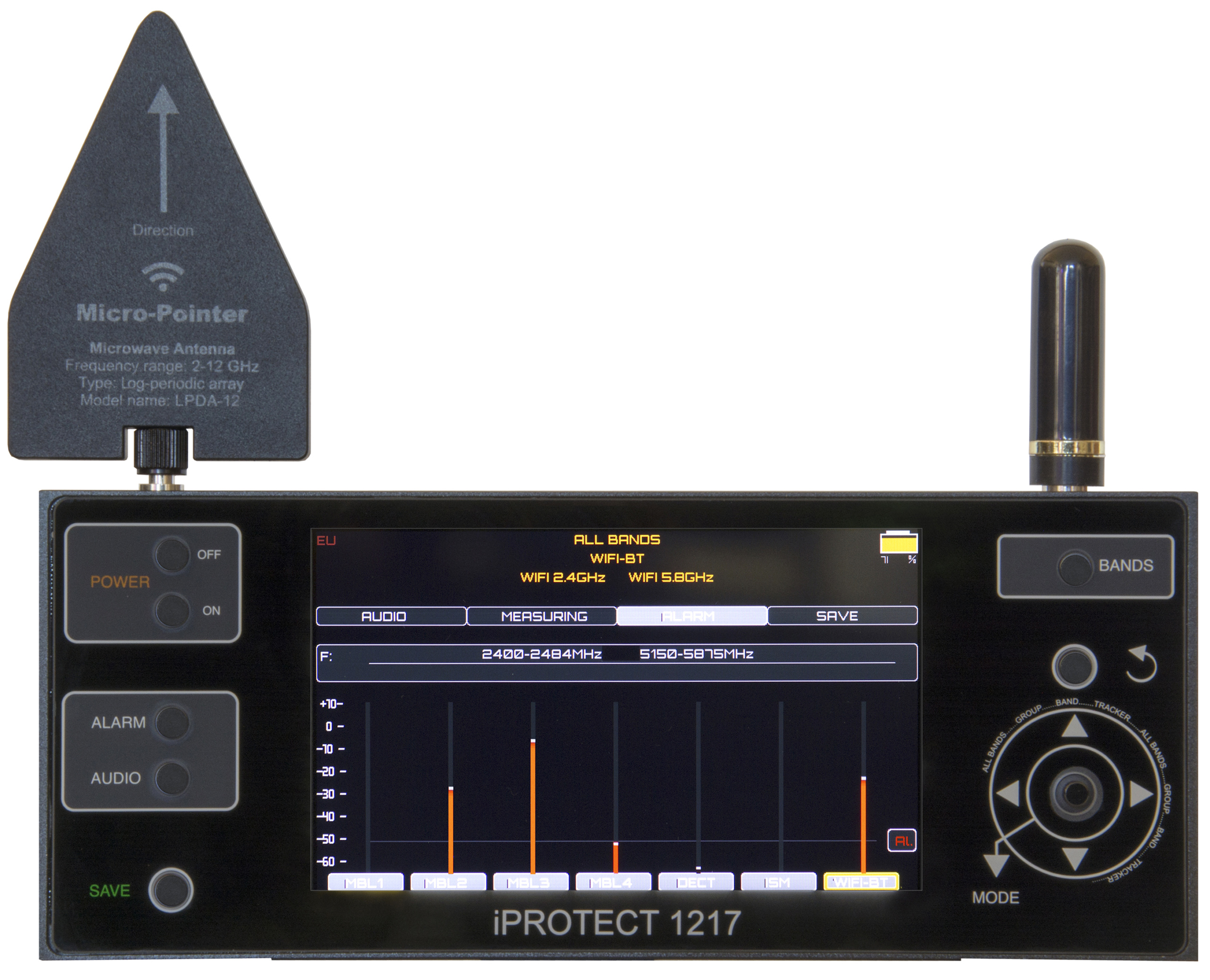
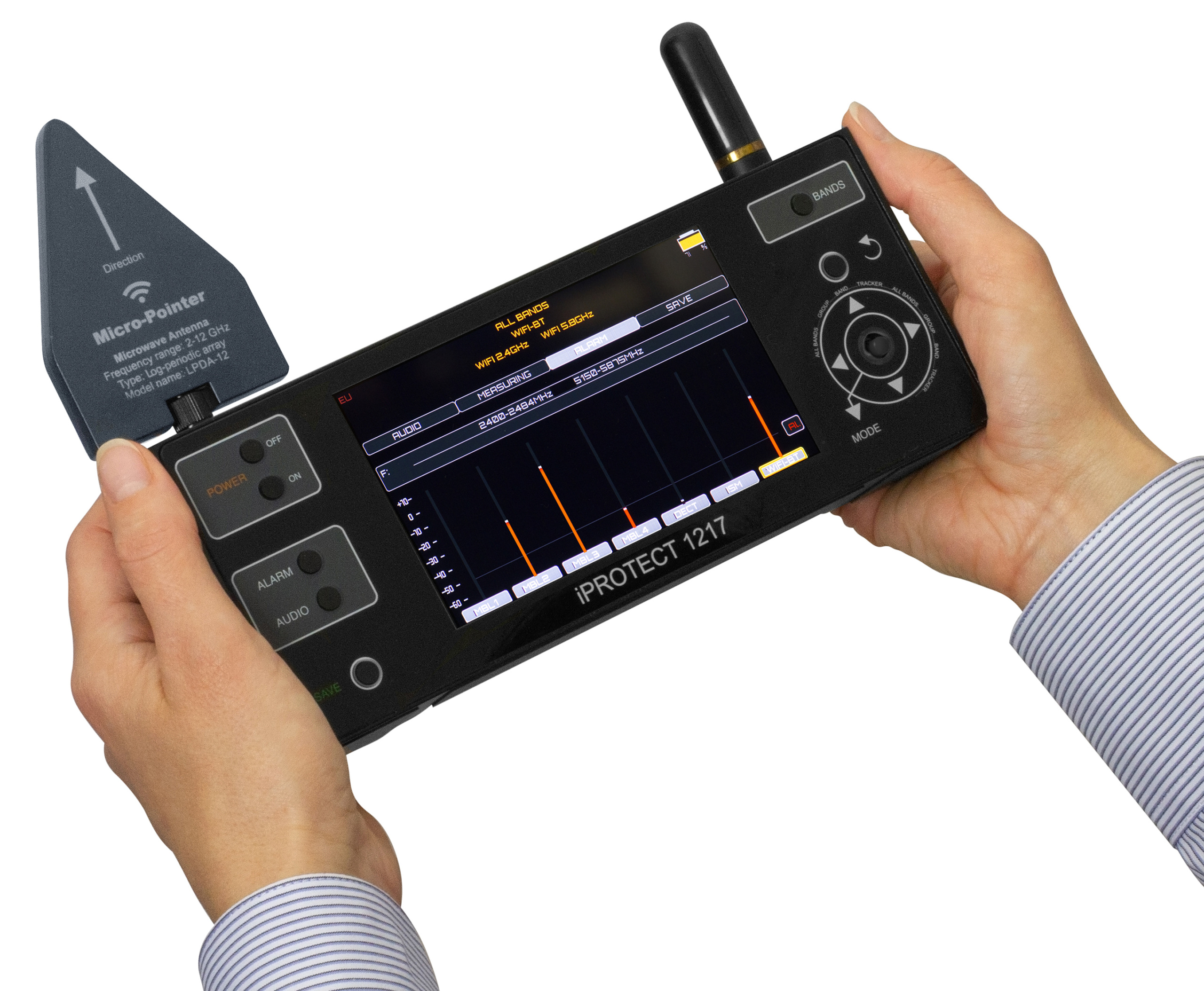
Detection of mobile communication signals is becoming an increasingly important task when searching for clandestine devices. This is due to the widespread distribution of surveillance tools (clandestine devices) that transmit information via mobile networks. Mass production of components for developers, such as GSM, 3G, 4G / LTE, and 5G modules, makes it possible to cheaply and quickly develop surveillance tools that have extremely high quality for transmitting audio, video, or location. Hidden video cameras camouflaged as household appliances, toys, or interior items are likely to transmit data via mobile networks or Wi-Fi. Audio eavesdropping systems often have a SIM card slot to operate on the cellular network. A GPS tracker is a device installed on vehicles that informs about its location. It also sends coordinates via mobile communication.
Unfortunately, wideband RF detectors or near-field receivers have low sensitivity and are not very suitable for detecting mobile devices. This is due to the nature of RF detectors to receive all signals simultaneously and display them cumulatively on a scale, resulting in stronger signals interfering with the ability to find weaker ones.
Selective detectors have a significantly greater mobile signal detection range because they only receive them and ignore other frequencies. Unfortunately, one complexity arises when developing a selective detector. It is very difficult to create a detector that is capable of receiving all mobile bands simultaneously. As is well known, more and more mobile bands are emerging. The GSM standard operated on two bands. Then 3G appeared, which operated on one more band. The 4G/LTE standard required a wider frequency spectrum for operation, so 3 to 7 frequency segments were allocated to it in each country. Then 5G appeared, which requires an even wider spectrum. Several more wide bands are allocated for its operation. Thus, currently, there are up to 10-15 different mobile communication frequency bands in each country according to the national frequency allocation.
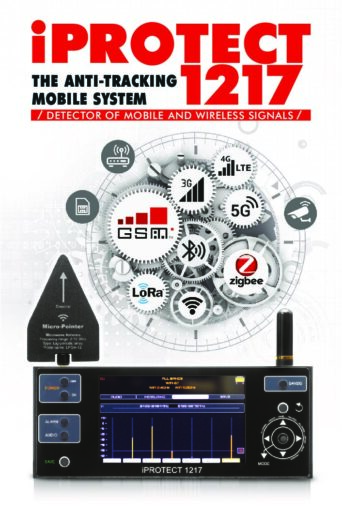
Creating a selective detector capable of detecting signals from all mobile bands and operating in all countries is very difficult. Fortunately, the developers of iProtect 1217 succeeded in this task. iProtect 1217 is the only device in the world capable of detecting all existing mobile standards on all continents. Its table includes at least 26 bands that can be selected automatically or manually.
In addition to mobile communications, the 1217 detects Wi-Fi, Bluetooth, DECT, ISM 434 MHz, ISM 868 MHz, and ISM 915 MHz signals. These standards can obviously be used by clandestine devices for transmitting audio and video signals, and therefore such transmitters must be found and identified.
Besides high sensitivity, selective detectors have another significant advantage compared to wideband detectors. The user sees exactly which signal was detected. This significantly improves the ability to distinguish suspicious signals from external interference and allows for physical searching of an individual transmitter. This capability is absent in wideband detectors which mix all signals together. The iProtect 1217, as a selective detector, can operate in single-band analysis mode, making it indispensable during professional searches.
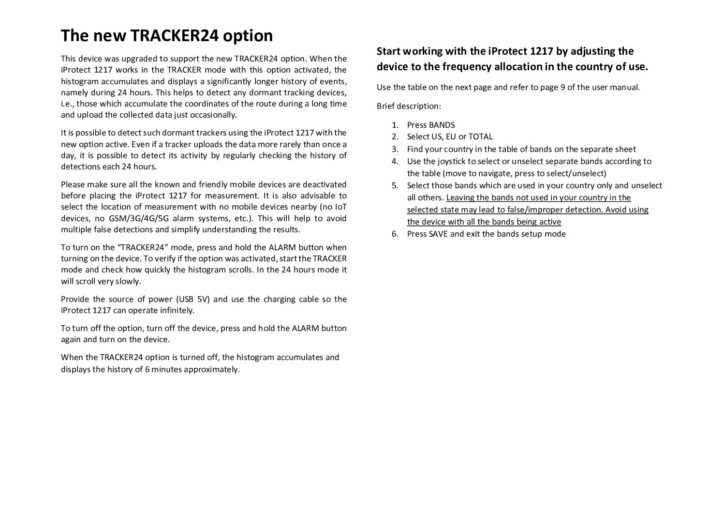
Another important advantage of the iProtect 1217 is the GPS tracker search mode. In this mode, the device is configured to detect only mobile signals and accumulates history to find periodic data transmissions with coordinates.
Key Capabilities
- Ability to detect mobile and wireless signals at a distance significantly greater compared to ordinary RF detectors (at least 10 times)
- Selectivity, interference immunity, and high sensitivity
- Ability to detect mobile standards on all existing bands worldwide up to 6 GHz, including GSM, CDMA, 3G, 4G / LTE, and 5G
- Ability to detect all wireless signals, including Wi-Fi 2.4 GHz, Bluetooth, Wi-Fi 5 GHz, DECT, ISM 434MHz, ISM 868 MHz, and ISM 915 MHz
- Detection on at least 26 mobile and wireless bands
- Configuration to the frequency allocation of the country of use and the possibility of manual editing of the band table
- The selective operation principle informs the user about exactly which signals were found
- Single-band analysis mode facilitates the physical search for a transmitter
- Separate GPS tracker detection mode with history accumulation
- ALARM function warns the operator about threshold exceedance audibly and visually
- 43 threshold levels for setting optimal sensitivity
- Can be configured to solve specific tasks, for example, detecting only Wi-Fi, etc.
- OPERATING MODES:
- ALL BANDS (detection on all bands)
- GROUP (detection in the selected group of bands)
- BAND (analysis of a single band)
- TRACKER (detection of GPS trackers)
- Two data accumulation speeds in TRACKER mode – 6 minutes and 24 hours. The 24-hour mode is well suited for detecting trackers (beacons) that accumulate coordinates over a long period of time and rarely transmit data
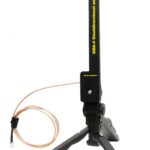
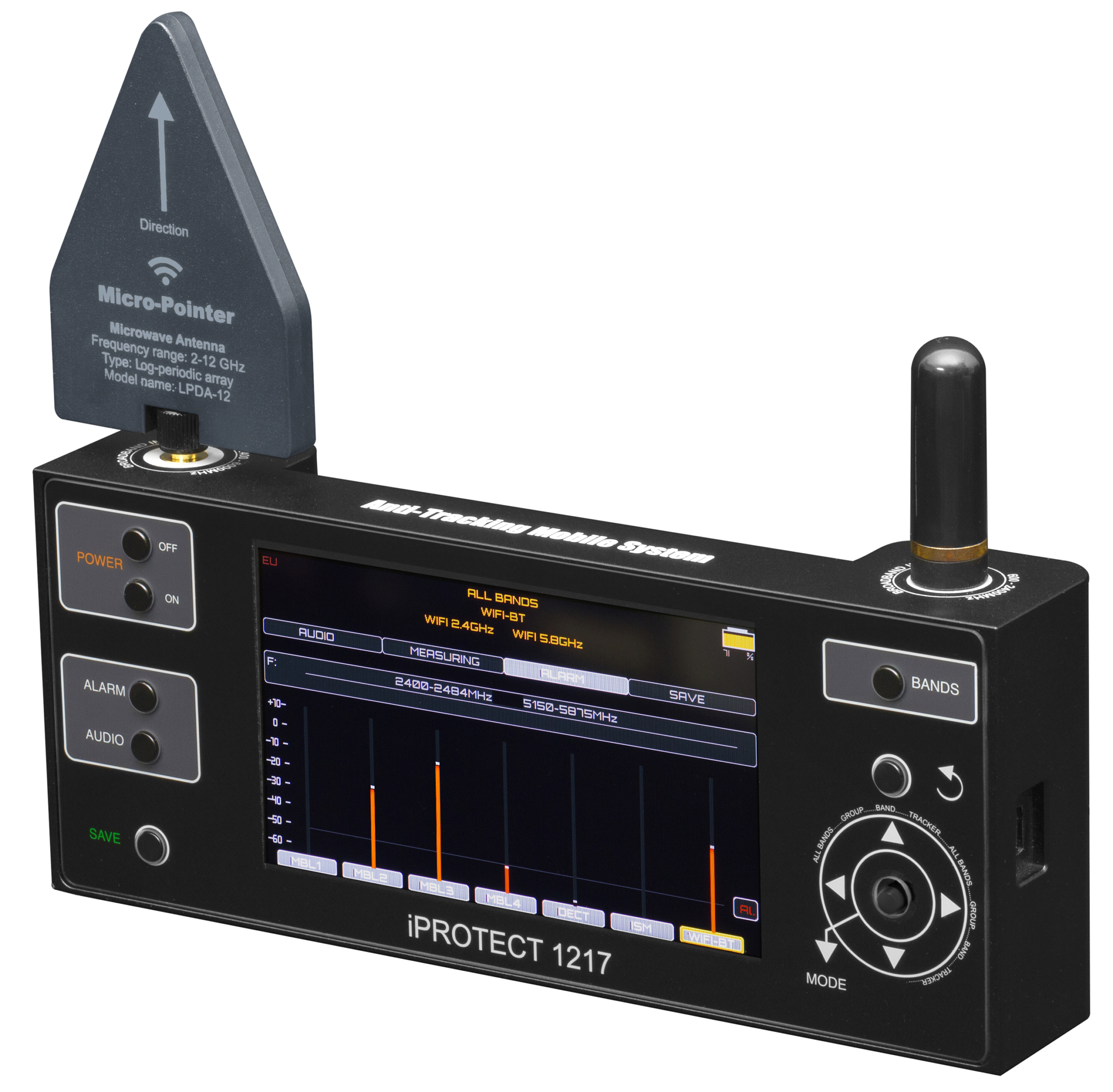
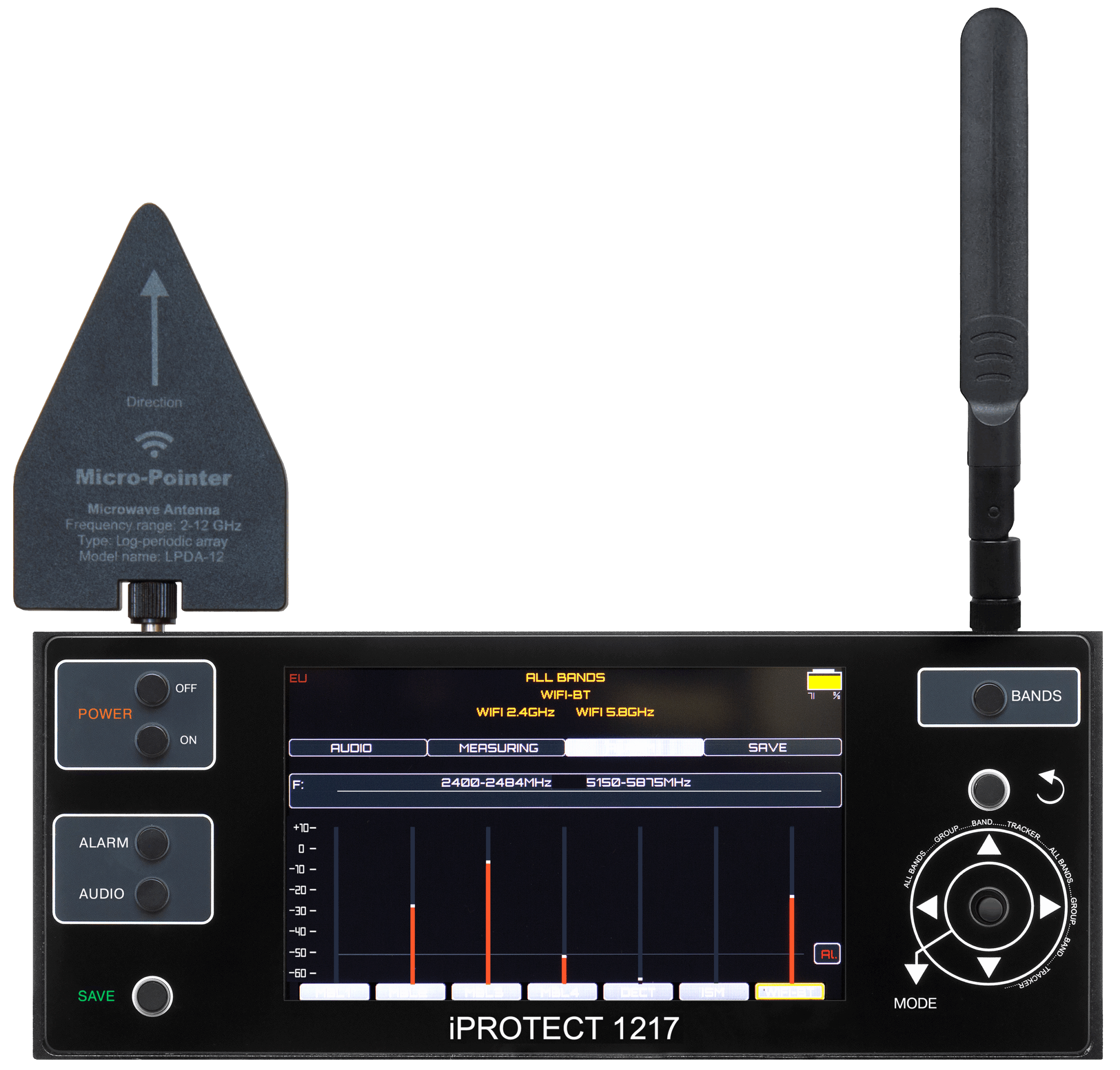
- Two antenna inputs and two antennas included in the set to ensure maximum sensitivity
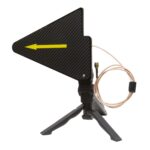
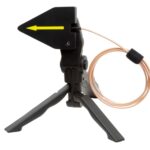
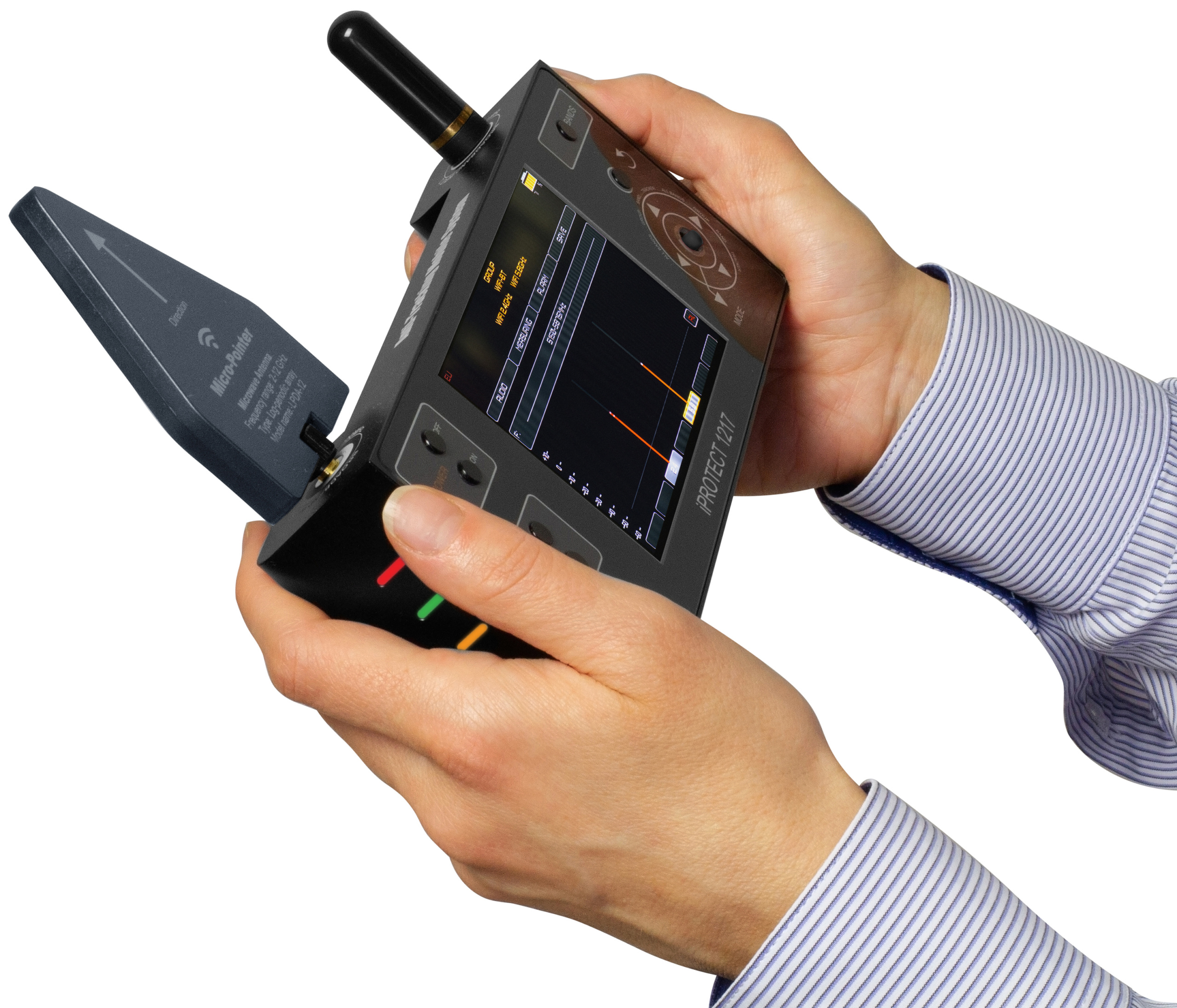
- Directional antenna for the upper band facilitates localization
- Built-in rechargeable battery provides up to 5 hours of operation life
- Charging via USB
Specification
| Number of Bands | 26 |
| Antenna Inputs |
|
| Average Sensitivity | -60 dBm |
| Operating Modes |
|
| Alarm Function | Visually or audibly |
| Number of Alarm Threshold Levels | 43 |
| Audio Signals | Alarm, button press |
| Regions |
|
| Controls |
|
| Charging Source | USB 5V |
| Power Supply | Built-in rechargeable battery 6800 mA·h 3.7V |
| Battery Life | 5 hours |
| Weight |
|
| Dimensions |
|
| Operating Temperature Range | -5…50 °C |
Frequency Range
| Group | Band | Frequency, MHz |
|---|---|
| MBL1 |
|
| MBL2 |
|
| MBL3 |
|
| MBL4 |
|
| DECT |
|
| ISM |
|
| BT-WIFI |
|
Supplied set
| Device |
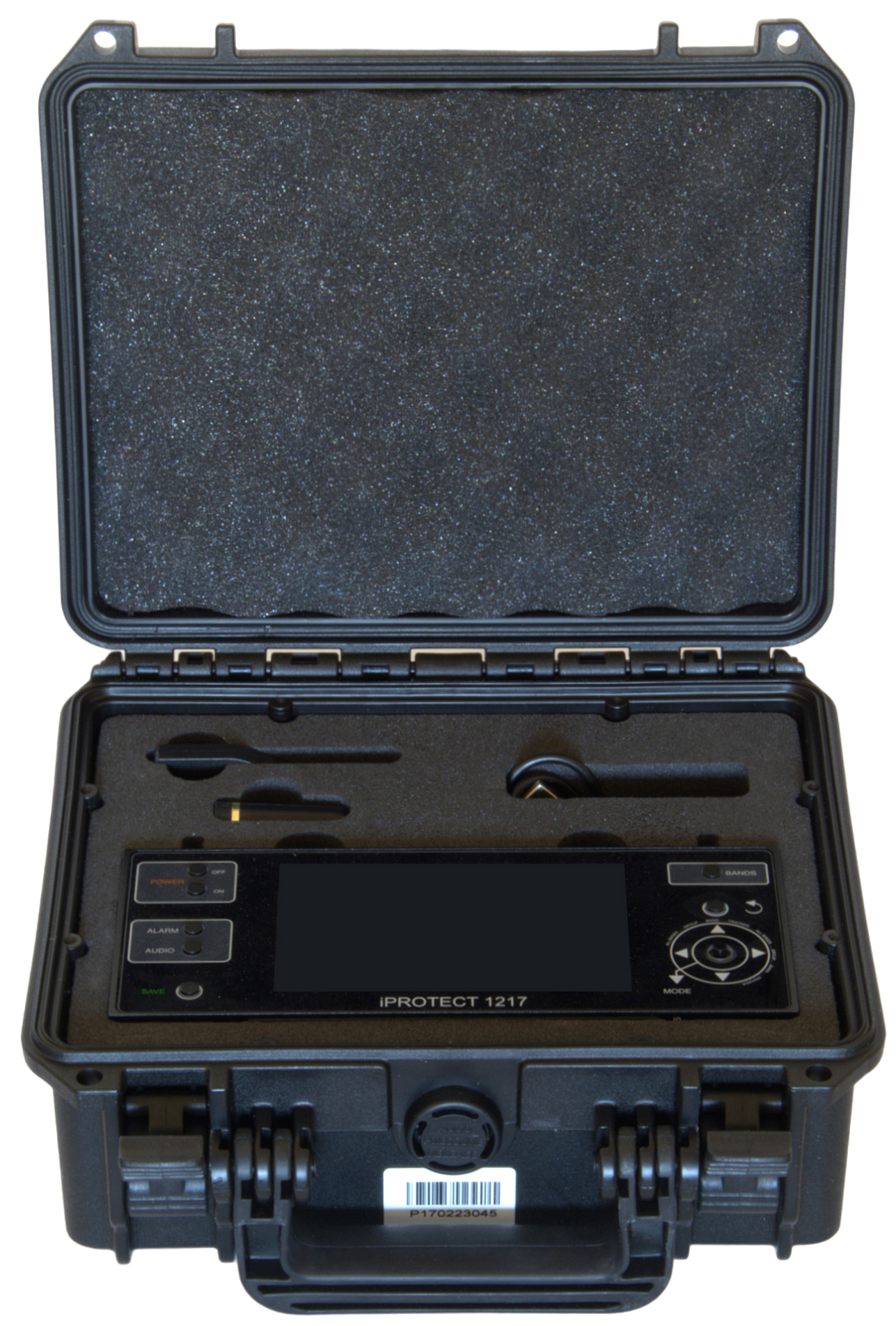
| High-band antenna Micro-Pointer LPDA-12 |
| Low-band rod antenna |
| Charging cable USB Type C |
| 2 x Angle adapter SMA |
| A case for transportation |
| User’s Manual |